Nobel laureate Professor Gregg L. Semenza visited Guangzhou Medical University on May 29 for academic exchanges and discussions on potential research collaboration.
During his visit, Prof. Semenza met with Academician Zhong Nanshan, Director of the Guangzhou Laboratory, at the university’s First Affiliated Hospital and the National Respiratory Medical Center. Their discussions focused on advancing joint basic and translational research on hypoxia-inducible factors (HIFs), particularly in the context of chronic respiratory diseases and lung cancer.
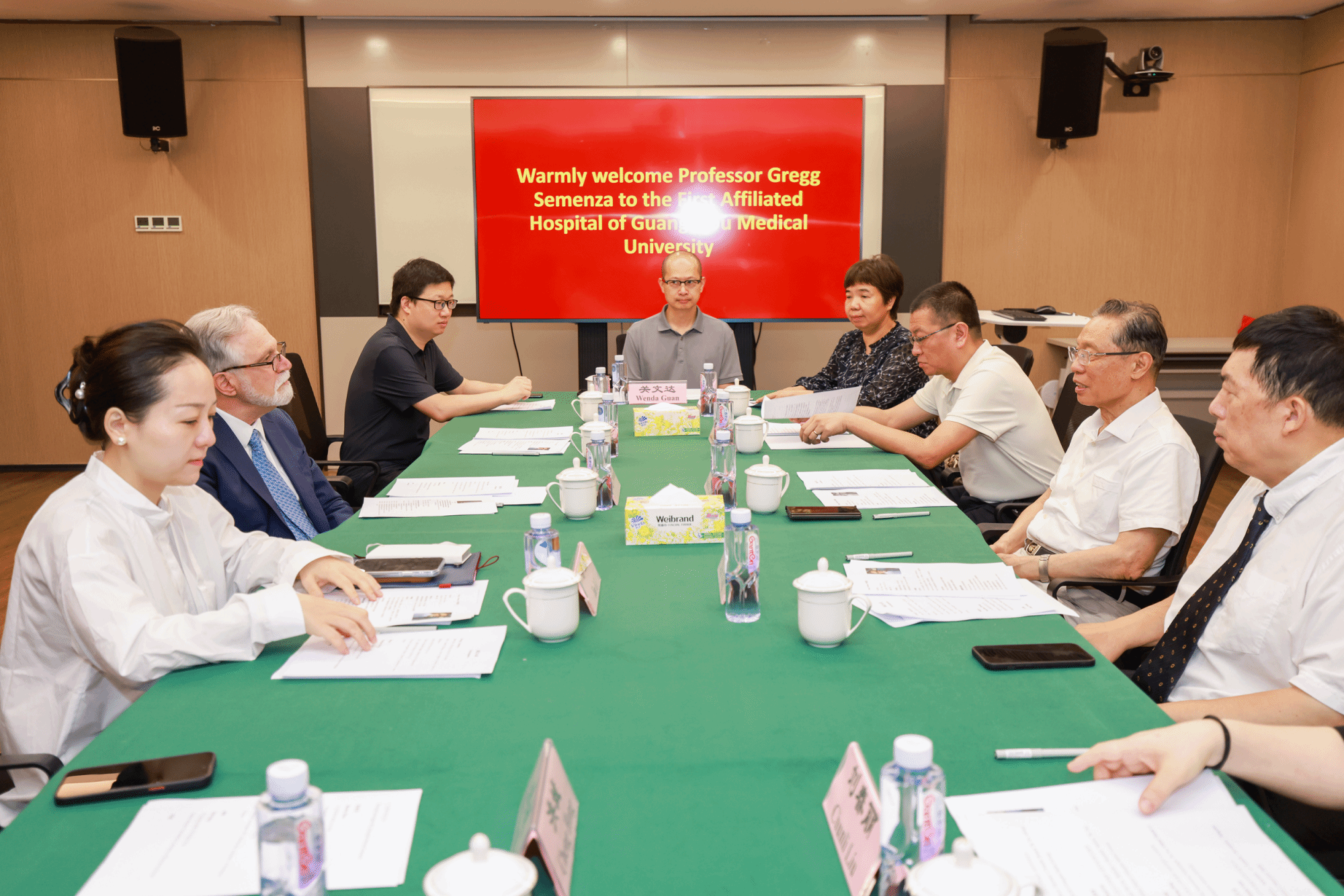
Academician Zhong Nanshan meets with Prof.Semenza
Prof. Semenza toured key research and clinical facilities at the Guangzhou Institute of Respiratory Health, including the Respiratory Big Data Center and the biobank. He also visited the hospital’s intensive care unit (ICU), where he learned about advanced clinical applications, such as naked-eye 3D technology used in thoracic surgery.
He later met with University President Zhao Xingcun and representatives from relevant departments to discuss expanding cooperation in scientific research, international exchange, and high-level talent development.
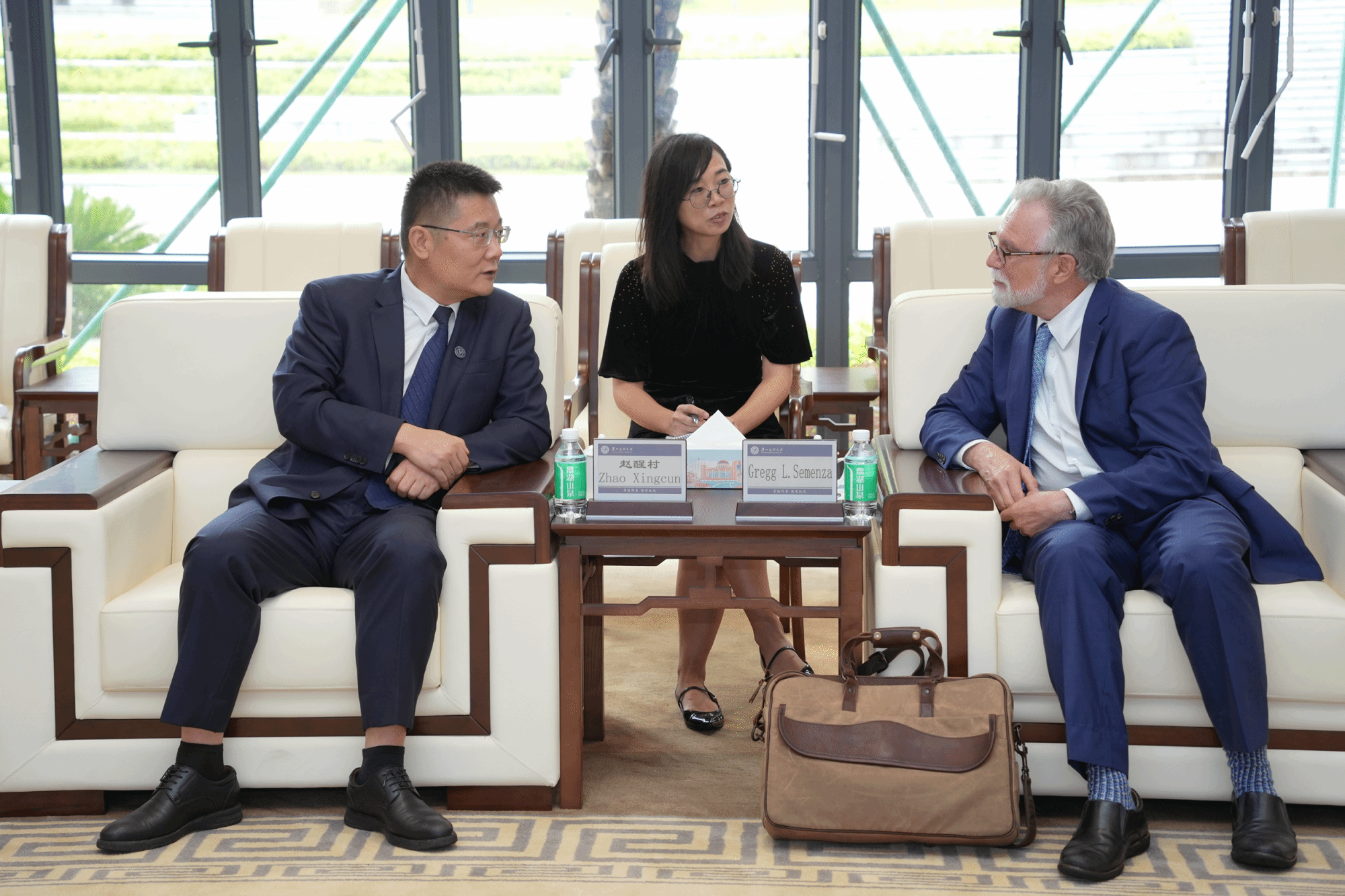
President Zhao Xingcun meets with Prof.Semenza
At the university’s Panyu Campus, Prof. Semenza delivered a lecture titled Hypoxia-Inducible Factors in Physiology and Medicine to Nanshan Scholars, postdoctoral researchers, and graduate students. In his lecture, he reviewed the discovery of hypoxia-inducible factor-1 (HIF-1), its role in disease development—including cancer and hypoxic pulmonary arterial hypertension—and the prospects for translational applications targeting related signaling pathways.
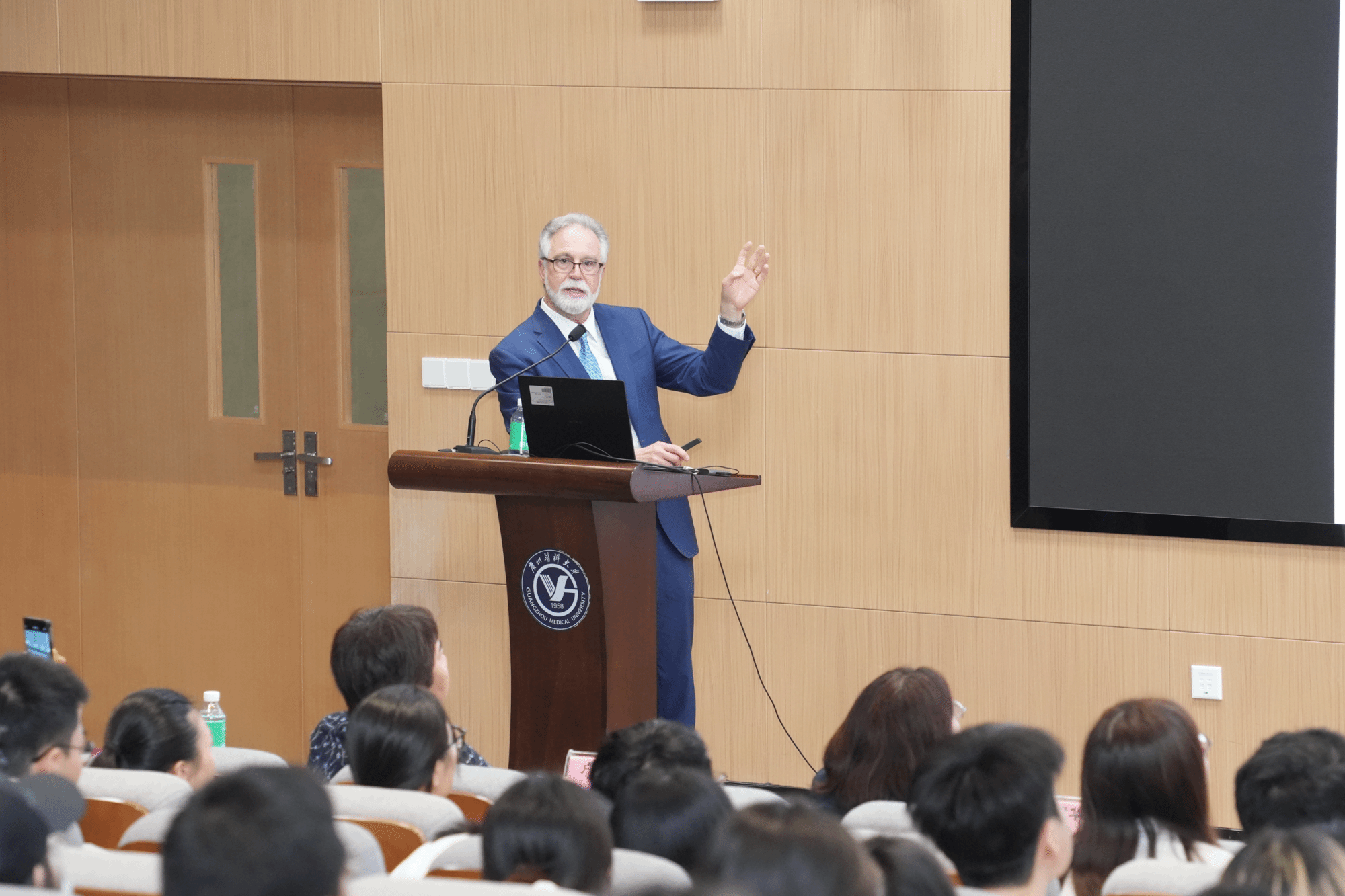
Prof. Semenza gives a lecture
Professor Semenza, who won the 2019 Nobel Prize in Physiology or Medicine, is a member of both the U.S. National Academy of Sciences and the U.S. National Academy of Medicine. He is also a tenured professor at the Johns Hopkins University School of Medicine. He received the Nobel Prize for his groundbreaking discoveries on how cells sense and adapt to changes in oxygen availability, uncovering new pathways for the treatment of anemia, cancer, and other diseases.

 News/Events
 Tel:020-37103000
 Panyu Campus:No.1, Xinzao Road, Xinzao Town, Panyu District, Guangzhou
 Fax:020-37103099
 Postcode:511436


 CN
CN SEARCH...